
Jonathan Schooler
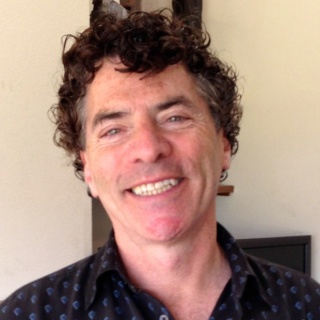
Distinguished Professor
Research Area
Cognition, Perception, and Cognitive Neuroscience
Campus Affiliations
The Center for Mindfulness and Human PotentialBiography
Jonathan Schooler, PhD, is a Distinguished Professor of Psychological and Brain Sciences at the University of California Santa Barbara, Director of UCSB’s Center for Mindfulness and Human Potential, and Director of the Sage Center for the Study of the Mind. His research intersects philosophy and psychology, including the relationship between mindfulness and mind-wandering and theories of consciousness. A former holder of a Tier 1 Canada Research Chair, Jonathan’s research has been featured on television shows including Closer to Truth, BBC Horizon and Through the Wormhole with Morgan Freeman. With over 270 scholarly publications and over 50,000 citations he is a six time recipient of the Clarivate Analytics Web of Science™ Highly Cited Researcher Award, recipient of the ScholarGPS 2025 “Top Scholar” Award as well as their “Highly Ranked Scholar-Lifetime in All Fields of Scholarly Endeavor”, and included as one of the top 100 cognitive psychologists by both ScholarGPS.com and Academicinfluence.com.
Research
My lab’s research takes a “big picture” perspective in attempting to understand the nature of mental life, and in particular consciousness. Combining empirical, philosophical, and contemplative traditions, we address broad questions that cross traditional disciplinary boundaries. Some of the topics and associated questions that intrigue us include: Meta-awareness: When do we notice our thoughts and how does explicitly attending to an experience affect it? Mind-wandering: How does the stream of consciousness flow between the external world and internal thoughts and feelings? Mindfulness: Are there ways of enhancing our capacity to remain focused in the present moment? Creativity-What processes contribute to creative discoveries, and how can we enhance them? Belief in free will: What do people believe about their capacity for control, and how do those beliefs impact their behavior. Verbal Overshadowing-Under what situations can putting non-verbalizable thoughts into words be disruptive?
We are also interested in broader issues and associated questions regarding the frontiers of science. These include: Meta-science: How can scientific methods be used to improve the scientific process itself? The decline effect: Why do a surprising number of domains show systematic reductions in their effect sizes with repeated replication? Anomalous cognition: What is the evidence for human mental capacities (e.g. precognition) that challenge current physical theories? Metaphysics of science: How does the current state of science constrain our views on fundamental issues such as the existence of free will and the manner in which consciousness is manifest in the universe?
Selected Publications
- Protzko, J. & Schooler, J.W. (2017). Decline Effects: Types, Mechanisms, and Personal Reflections. In S.O. Lilienfeld & I. D. Waldman. (Eds.) Psychological Science Under Scrutiny
- Mooneyham, B. W., Mrazek, M. D., Mrazek, A. J., Mrazek, K. L., Phillips, D. T., & Schooler, J.W. (2016). States of mind: Characterizing the neural bases of focus and mind-wandering through dynamic functional connectivity. Journal of Cognitive Neuroscience.
- Mrazek M. D., Mooneyham, B.W., Mrazek, K.L., Schooler, J.W. (2016) Pushing the Limits: Cognitive, Affective, & Neural Plasticity Revealed by an Intensive Multifaceted Intervention. Frontiers in Human Neuroscience. 10
- Zedelius, C. M., & Schooler, J. W. (2015). Mind wandering “Ahas” versus mindful reasoning: Alternative routes to creative solutions. Frontiers in Psychology,6.
- Schooler, J. W., Mrazek, M. D., Baird, B., & Winkielman, P. (2015). Minding the mind: The value of distinguishing among unconscious, conscious, and metaconscious processes. APA Handbook of Personality and Social Psychology, 1, 179-202.
- Shariff, A. F., Grene, J. D., Karremans, J. C., Luguri, J. B., Clark, C. J., Schooler, J. W., & Vohs, K. D. (2014). Free will and punishment: A mechanistic view of human nature reduces retribution. Psychological Science, 25(8), 1563-1570.
- Schooler, J. W. (2014). Turning the lens of science on itself verbal overshadowing, replication, and metascience. Perspectives on Psychological Science, 9(5), 579-584.
- Schooler, J.W., Mrazek M.D., Franklin, M. S., Baird B., Mooneyham, B. W., Zedelius, C., & Broadway, J. M. (2014). The middle way: Finding the balance between mindfulness and mind-wandering. Psychology of Learning and Motivation, 60. 1-33.
- Baird, B. Smallwood, J., Mrazek, M.D., Kam, J., Franklin, M.S. & Schooler, J.W. (2012) Inspired by distraction: Mind-wandering facilitates creative incubation. Psychological Science
- Schooler, J.W., Smallwood, J., Christoff, K, Handy, T.C., Reichle, E.D., & Sayette, M.A. (2011) Meta-awareness, perceptual decoupling and the wandering mind. Trends in Cognitive Science 15, 319-326
- Schooler, J.W., Hunt .T & Schooler, J.N. (2011) Reconsidering the Metaphysics of Science from the Inside Out. In S. Schmidt, H. Wallach, Eds Neuroscience Consciousness and Spirituality (pp 157-194) New York: Springer
- Schooler, J. W. (2011) Unpublished results hide the decline effect. Nature, 470, 437.
- The Impact of Cigarette Craving on Zoning Out While Reading. Psychological Science, 21, 1, 26-30.
- Christoff, K, Gordon, A.M., Smallwood, J., Smith,R., & Schooler, J.W. (2009). Experience sampling during fMRI reveals default network and executive system contributions to mind wandering. Proceedings of the National Academy of Sciences 106, 8719-8724
- Chin, J & Schooler, J.W. (2009) Why do words hurt? Content, Process, and Criterion Shift Accounts of Verbal Overshadowing. The European Journal of Cognitive Psychology
